
【無用之用—知識的重量】李洪波 / “Usefulness of Uselessness — The Weight of Knowledge” LI Hongbo
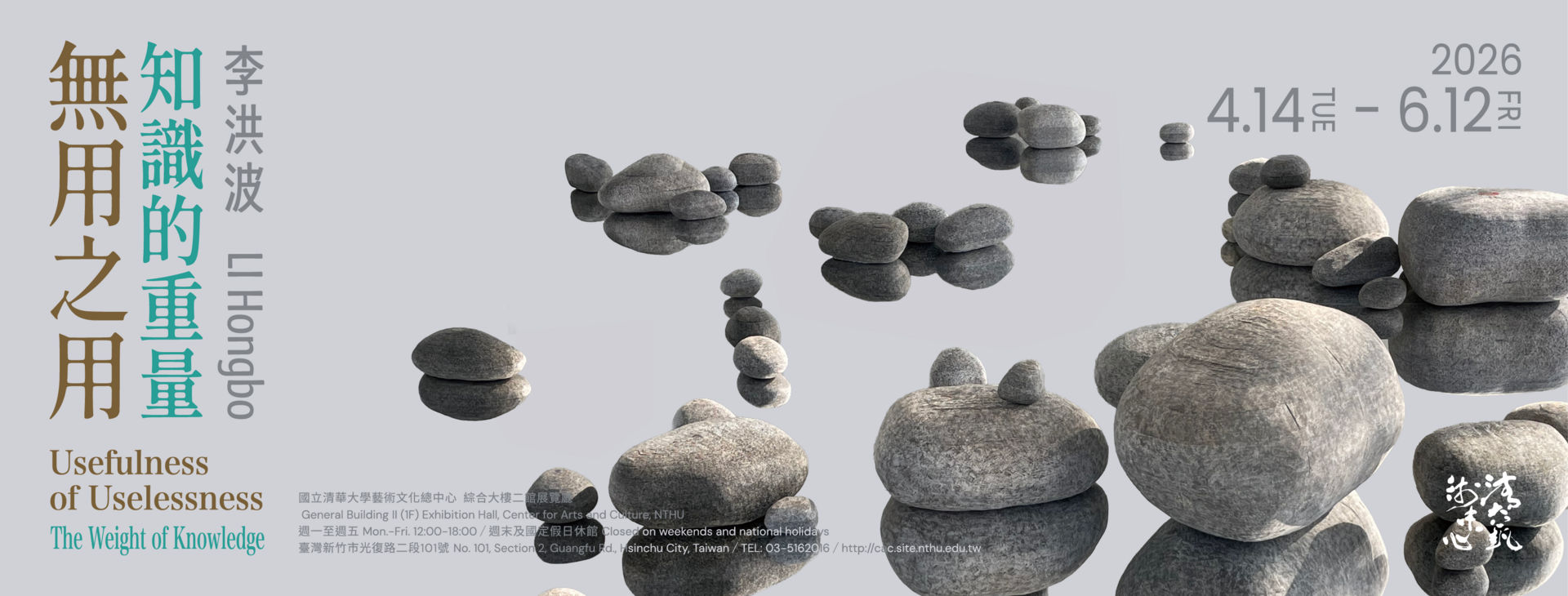
展覽開幕 2026 / 4 / 14(二)16:30 ;同展覽地點
展覽期間 2026 / 4 / 14(二)—— 6 / 12(五)週一至週五 12:00-18:00,週末及國定假日休館
展覽地點 國立清華大學 藝文總中心綜二館展廳
展覽介紹 洪波老師,外貌不似當代藝術界那些長髮飄逸、走路帶橫的藝術家;是樸素的、不張揚的那種。但一出手,是我們
都期待的場。
沒有大批判,低調訴說眾生的沒辦法。感知及實踐在當代藝術手法裡,最難的是知行合一,要說的準確更難;而李
洪波展現的微妙之處,用作品改變了人認知及思考的既定模式,恰如一個水波紋在心裡蕩漾,感知美妙。
李老師採用兒時的拉花紙童玩,靠著蘸粘上萬張,延伸,玩出新花樣。以裝置、雕塑的西方語言,構建出東方內涵
的當代餘韻。 無論是類石膏像的雕塑、綺艷的大型花海裝置、10噸廢棄教科書的「高考」,如此平常,又如此震耳
潰聾。
當代藝術的蓬勃,是一個土地接納新事物的包容結果,能植基於傳統文化,更是民族的自尊自重展示;歡喜清華一
直以知識分子的包容力,眼觀四海、八方風動時,仍以文化為重,知曉當代藝術的美好來自實驗求知的力量。
這個既輕且重的展覽,感謝洪波老師的遠距支持,得以實現。展現的每塊石頭,不是偶然,是藝術家沉澱、再造的
思想過程,耗時數年對藝術家來說是平常,誠如藝術對眾人,看似無用,實為大用。
Opening 2026 / 4 / 14(Tue.)16:30 ;at the same venue
Exhibition Period 2026 / 4 / 14(Tue.)—— 6 / 12(Fri.)Mon-Fri 12:00-18:00, Closed on weekends& national holidays
Venue General Building II (1F) Exhibition Hall, Center for Arts and Culture, NTHU
Exhibition Introduction Mr. LI Hongbo does not resemble those contemporary artists with flowing long hair and an imposing stride;
he is modest and unassuming. Yet whenever he presents his work, it is something we all anticipate.
There is no grand critique-only a quiet reflection on the inevitabilities of human existence. In contemporary art, the
integration of perception and action is difficult, and even harder to articulate with precision; yet LI Hongbo
transforms established modes of cognition and thought through his work-like ripples spreading across the mind.
Drawing from a childhood honeycomb paper toy, LI Hongbo layers and bonds tens of thousands of sheets,
extending them into new possibilities. Through installation and sculpture, he constructs a contemporary language
imbued with Eastern sensibilities. Whether in plaster-like sculptures, large-scale floral installations, or Gaokao,
made from ten tons of discarded textbooks, his works appear ordinary, yet resonate with striking force.
The flourishing of contemporary art reflects a land's openness to new ideas; when rooted in tradition, it becomes
an expression of cultural dignity. With a quiet sense of delight, Tsing Hua upholds an intellectual openness,
remaining grounded in culture while embracing the world.
This exhibition is both light and weighty. We are grateful for Mr. LI Hongbo's support from afar. Each is not
accidental, but the result of sustained reflection and reconstruction. Years of labor are ordinary for an artist;
just as art may seem useless, it is precisely where the Usefulness of Uselessness is found.