Exhibition Introduction
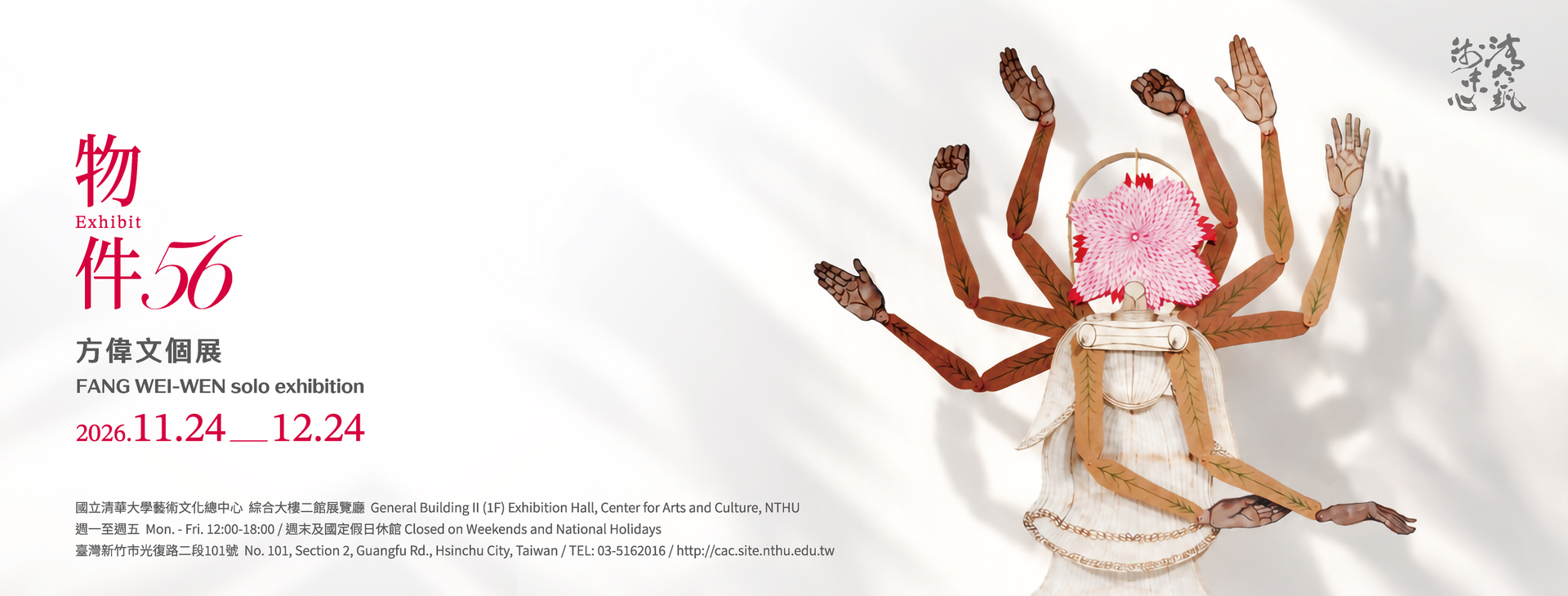
Objects are familiar presences in everyday life, yet they also carry memories, experiences, and traces of time. For artist Fang Wei-Wen, objects are not merely materials for artistic creation, but subjects of ongoing exploration and dialogue throughout his artistic practice. Since his early works, Fang has continuously sought to move beyond the two-dimensional limitations of painting. Through processes of collecting, cutting, collaging, stitching, and assembling, he rearranges different materials, images, and symbols, allowing his works to move between painting, sculpture, and spatial installation. Through this approach, he has gradually developed a distinctive visual language that may be described as “painting installation.”
Naming his exhibitions after his age has become an ongoing practice for Fang. The number in Object 56 not only marks the passage of time, but also represents the accumulation of life experiences. Seemingly ordinary materials, human figures, and cultural symbols gradually depart from their original functions and contexts through the artist’s selection and arrangement, taking on new forms and meanings. The encounters and recombinations of these elements echo the intertwining of experiences in everyday life, revealing the diverse and shifting relationships between memory and daily existence.
In Fang’s artistic practice, objects are not simply a means of exploring form and material; they are also a way of transforming personal experiences into an artistic language. Through his sustained creative practice, the artist incorporates his observations of everyday life and the world around him into his works, allowing objects to become another means of expression that connects daily life with the broader journey of human experience.